


Mathematics. Queen of science or a nightmare for students at night? How to make children like maths and not have problems with it? How to develop mathematical imagination and show children that math is not bad at all, and can even be interesting and fun? How to make mathematics more “friendly” and that you do not have to have a close mind to understand and like it? We invite you to read our post.
It has long been known that children learn best through play. Introducing different topics with board games gives great results. After a few games, we will notice the differences, and our kids learn many new things “while having fun”.
Mathematics is not one of the subjects children love at school. Even if a child approaches her with a positive attitude at first, she loses enthusiasm over the years. How can you make sure that your child does not have problems with mathematical thinking? How to introduce visual math that you can not only understand, but also see and feel?
We, as parents, can help our children enjoy counting and make it not a problem for them. We can combine business with pleasure, spend time in the family circle, at the same time passing on knowledge to the child in a painless way.
Why are we really learning math? We have to show our children that it is everywhere, we use it every day. Mathematics will allow you to understand many aspects of life. Despite the precision and strict rules (after all, it is a strict science), mathematics is also a creative discipline, requiring a flexible approach, walking along side paths. It is also an opportunity to invent and then verify your ideas, change them, develop them, connect with others.
What math games should we choose for our children?
Personally, I don’t like typical math games. The ones that include dry examples and adjust the result to the action. I have the impression that they scare children away and are associated not with fun, but with ordinary cramming. I highly recommend games where counting is just an addition to great fun. It is not an end in itself, but necessary for the gameplay. While playing such games, the child will not even realize that he or she is learning something. We will have a nice time, and our children learn about things such as addition, subtraction, multiplication and division. Additionally – by playing games, we teach the youngest logic, strategy, concentration and patience (more about the benefits of playing board games in our table of 20 board games in the spirit of Maria Montessori).
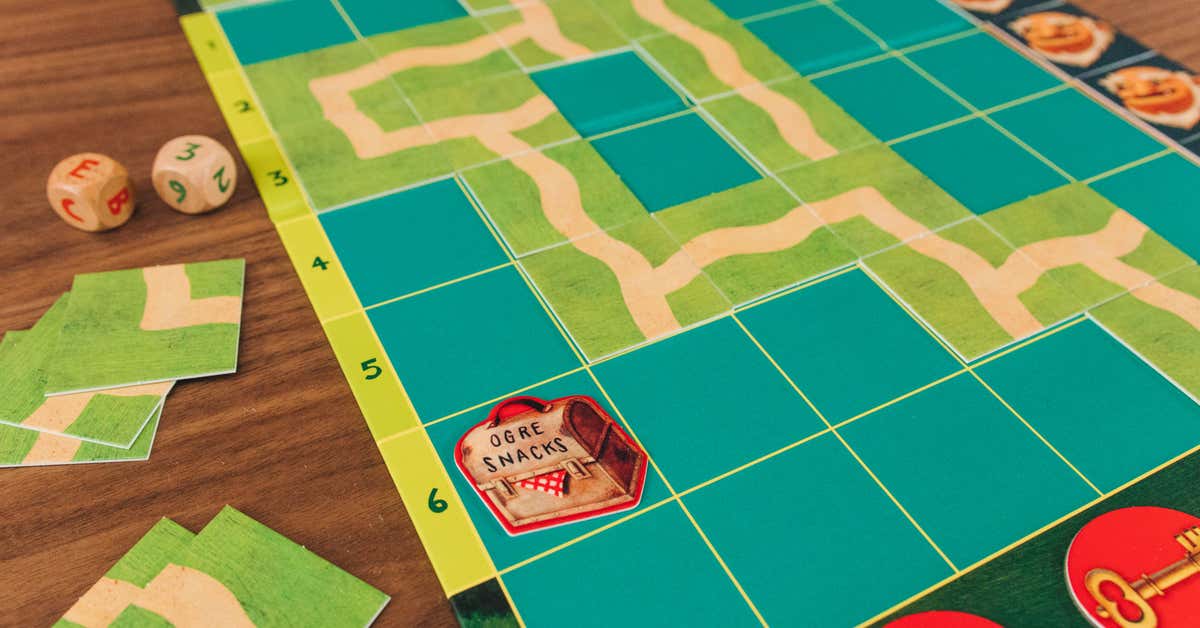
How to start playing with children?
Let’s start with learning the basic concepts. A good understanding of concepts makes us better able to remember and use the knowledge we have acquired. In addition, we analyze more efficiently because we feel confident, create mental images and think abstractly. In short: it’s easier for us to learn! Let us teach children what is bigger and what is smaller, let us compare everything we can, let us arrange ranks, create sets and rhythms. Let’s count every day, let’s show the child that math is everywhere. Let’s show what symmetry is, let’s add blocks and other items, let’s solve puzzles. When our children know the numbers and the basics of adding (you can also use board games for the youngest), we can start a mathematical adventure with them. In the toplist, I took into account games for children from 6 years of age who already know the basics of mathematics and can cope with basic activities and can recognize numbers.
Cool math games as an aid in learning mathematics – 20 proposals
Spiace Krolewny (Rebel)
Fantastic card game that I recommend to all parents. It has “that something” that draws children to it – maybe because it was invented by a 6-year-old girl. The game is very simple but addictive. We wake up the title Krolewny with the help of the Prince’s cards. In the meantime, we try to choose the cards that suit us, replacing the ones we have on hand. We can put one card, we can more – but only if we have two identical or if they constitute an action (for example, two cards with a value of 2 and a card with a value of 4). Finally, we are counting the points scored – great learning to calculate numbers up to 100! Children learn, have fun, and parents do not get bored … The only drawback is quite a negative interaction, but it does not interfere with the game – you can easily play back. I recommend! (Age: 8+, but younger children can do it calmly!)
Multiplication Potion (Rebel)
A great way to consolidate the multiplication table. There are two levels of the game to choose from – easier and more difficult. We play cards with potions, mix them with each other (or multipliers) and use them to destroy numerical monsters … Great fun and learning along the way. Remember, however, that this game does not teach multiplication from scratch, so to play it, you need to know a little – otherwise we can discourage children from it, who will not know which potions can be mixed up with each other to defeat the monster. (Age: 7+)
Math BrainBox (Albi)
Interesting and unusual item. A neat little box contains cards on which we can find various topics. From basic world directions, through addition, geometric shapes to fractions, angles, figure boxes and graphs. I like this game very much because it gives me interesting ideas about the topics. Children like to look at and remember pictures and learn many things at the same time. In addition, we use the dice from this game, which have numbers instead of dots, for other games. (Age: 7+)
Pirates. Math game for addition and subtraction (Captain Science)
Interesting proposition to help consolidate basic arithmetic operations. Nice edition and simple rules of the game encourage children to play in collecting treasures. The game is typically “mathematical”, but thanks to the pirate atmosphere it does not stop you from having a great time. (Age: 4-8 years)
Educational cash register (Alexander)
This is not your typical board game, but the money in this game can be used in many ways! It teaches counting, it is useful for playing the shop and for many other games. In addition, a very low price makes this game a dream aid in learning mathematics for the youngest! (Age: 6+)
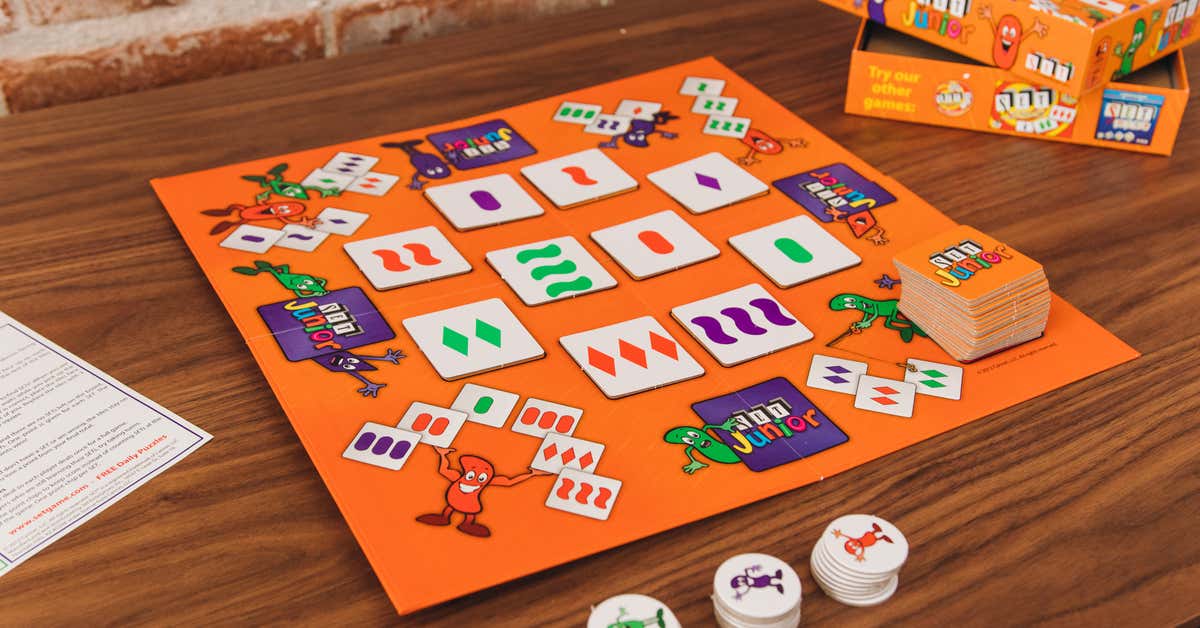
Set (G3)
The world-famous card game. It requires perceptiveness and carefulness, it “burns” the cerebral ganglia as little as any position. The rules are very simple, and the whole game is about searching for pictures and creating the title “set”, i.e. a set consisting of 3 cards. The game consolidates basic concepts such as shape, color, number and fill. Children love to play this game because they can do better than adults very quickly. (Age: 6+)
Actions and Reactions (Andamigo)
A great game in which we can play the role of a stockbroker. Our task is to skillfully manage assets, invest on the stock exchange and invest money in the bank. There are many economic concepts during the game, such as for example: capital, investments, stocks. Note, poor property management can end in … bankruptcy! (Age: 8+)
Stone Age (Bard)
A game for slightly older children, although I think that the 8-year-old should calmly deal with it. In this position, we learn to plan, as village chiefs we send our cavemen for adequate resources. We have to decide what is more worthwhile, then throw the right number of dice, multiply and round the result. Additionally, we spend our resources on cards and food for our pupils. Easy and fun economic game, we recommend it! (Age: 10+)
Cocoa (G3)
Enjoyable tile game in which our main goal is to grow cocoa. We collect them and then sell them for an appropriate fee on the market. The game teaches prediction, logic and strategic thinking. In addition, at the end, we must add up the points obtained (which can be even negative, if, for example, we have not collected the right amount of water). (Age: 8+)
Treehouse (Our Bookstore)
A game in which we use the draft mechanics. We pass the cards to each other and choose the ones that suit us best. Children need to think about which cards are worth collecting and, after the round is completed, add up their scores. A very nice and nicely made game. (Age: 8+)
Dziupla (Kukuryku)
Time to stock up on winter supplies! In the game we will play the cute squirrels, which must collect enough acorns for the winter. We have to plan our movements in such a way as to get as many valuable nuts as possible. The game is a great practitioner of logical thinking and… adding. It is interesting, well-made and inexpensive. We highly recommend it! (6+)
Superfarmer (Granna)
This is a real classic! Probably everyone has heard about this game and knows what it is … We exchange animals so that we breed at least one animal of a given type on our farm. We calculate and estimate what will give us the most points. Pleasant fun and learning in one! The game was released in different versions and with different additions. You can try to play … with a goat or a version of the UFO. (Age: 7+ but younger players can easily do it!)
Ubongo (Egmont)
A great puzzle game. The aim of the game is to compose a picture from the available elements. The game is great for developing logical thinking and imagination. An additional advantage is the beautiful workmanship and the crystals that we get for a well-done task. The game is also available in a card version and in a 3D version. We highly recommend them all! (Age: 8+)
Our full game review
Hippo (Helvetiq)
A micro game that fits into every backpack and every purse. Our task is to throw a set of colored balls into the pool. We throw 3 dice and decide how many balls we throw. Our decision is crucial for the rest of the game, the sooner we throw in the balls, the sooner we will win. But be careful! Not all balls will fit into the pool and some will just be pushed out of the pool. A nice, small and inexpensive game that is great for teaching adding and logical thinking. (Age: 6+)
Kingdomino (FoxGames)
A tile game in which our task is to create the best kingdom possible. But it can’t be just any kingdom… It has to be 5 × 5 and it has to bring us as many points as possible! We select the tiles so that they are the most profitable on points. Finally, we add up all the points. Great fun and learning in one! (Age: 8+)
Numerous bees (Green owl)
Enjoyable educational game in which we introduce the bees to the honeycomb. We use addition and subtraction for this. The more our bees work, the more honey we can get. At the beginning, we collect small jars, which we can exchange for large ones over time. Great fun, nice workmanship and educational aspect, great! (Age: 6+)
Dream (Our Bookstore)
A universal game that will prove useful in any company and at any age. Beautifully illustrated and made, inexpensive. Our task is to create a dream with as few ravens as possible. The game trains memory and counting. After each turn, calculate the number of birds occurring in the dream. The player with the fewest points wins. (Age: 8+)
Rummikub (TMToys)
Classic game. Great workmanship and characteristic cubes that we have to properly lay out on the table. Teaches numerical order and shows that playing with numbers can be great fun! It requires logical thinking and careful attention to how the situation changes during the game. (Age: 7+)
Fits (Egmont)
A logic game similar to the well-known Tetris. The game is about placing blocks on a special ramp. We have to be careful about the free spaces left because we will get negative points for them! The game is fun, requiring logical thinking and decision making. (Age: 8+)
Banda Stworow (Trefl Joker Line)
The game is advertised as an aid in learning foreign languages. In my opinion, it will also work great in learning mathematics. It allows you to learn basic math concepts, in addition, children have a great time calculating the number of eyes or horns in monsters…. Their great variety also makes learning about the harvest more enjoyable! You can also use it linguistically, in playing riddles and memo…. Excellent! (Age: 6+)
Mrowki (Our Bookstore)
The nice ants must return to their anthill…. Interesting position in which you should show your sense of observation and reflexes. We search for the right ants by color and number, and in the meantime we have to observe what is happening on the table and who has how many cards. He practices counting great! (Age: 6+)
Warehouseman (Our Bookstore)
Let’s play in arranging goods in the warehouse. A little game that can drag you on for a long time. We arrange the boxes and organize them so that we have as many of them as possible. Practice multiplication game, requires logical thinking, you can take it with you everywhere. Cool! (Age: 6+)
Hunting for worms (Egmont)
Chickens are fighting for worms. The game is to throw 8 dice at once. The number of eyelets thrown allows us to take a specific plate with the worm. The game is random, but our decisions are also important in it. The child has to decide what is more profitable, whether to take the bug or wait … The gameplay is fun, the rules are simple, both children and adults have a great time with it. (Age: 6+)
In addition, let’s not forget about classics such as Domino or Kosci. They can be used in many ways to learn math and logic. Examples of games with their use:
Dice (in all games you can also use dice for role-playing games):
- prepare the dice (from 2 to 6), throw them and count who has scored the most points,
- Match each number of meshes with a given color, for example, 1 is red, 2 is green, 3 is blue, and so on. Then ask the child to throw the dice and paint the picture according to the code,
- throw the dice and write down the result (the child is practicing writing down the numbers), and then count what was the most frequent (by the way, you can do an introduction to the statistics).
Domino:
- play “war” and count who has more spots on their stone,
- look for all stones with the given number of meshes and think about which is the most,
- look for pairs,
- stack domino towers to get as many points in the stack as possible.
Logical thinking is also great for teaching chess and playing cards. We currently have a wide selection of decks on the market, from classic to special ones with fairy-tale characters, animals, dark characters and so on …
Remember that the game must be fun for the child! If we see that the child is bored and is not focused on the game and does not enjoy it, let’s stop and move the game to another day. Every child is different. Let’s not compare! If your friends’ child adds and subtracts at the age of 4, and ours doesn’t even know numbers, don’t panic. There will be time for everything. Most of all, fun! Learning is fun …
I hope that the games from our ranking will make learning mathematics a little more pleasant for parents and children and will not seem so terrible to them anymore.


